
Professional Electrical Repair & Diagnostics
What is Electrical Repair & Troubleshooting?
ServiceFind connects homeowners with licensed master electricians to diagnose and repair electrical faults, tripping breakers, dead outlets, and wiring issues. All diagnostic work adheres to NEC Article 240 standards with upfront Fair Quote pricing and full warranty coverage.
The Science: Thermal-Magnetic Trip Dynamics & High-Resistance Connections
Circuit breakers operate via dual-action thermal-magnetic mechanisms. A continuous minor overload heats a bimetallic strip, bending it to trigger a trip over minutes. A direct short circuit generates an electromagnetic surge that triggers an instantaneous trip within milliseconds. When outlets fail or buzz, micro-arcing across loose screw terminals generates intense localized heat, creating carbonized paths that increase electrical resistance and ignite surrounding timber.
The Pain Point: Repeated Resets, Fire Hazards, & Hidden Arcing
Ignoring a tripping breaker by repeatedly resetting it degrades the internal latch mechanism and allows continuous conductor overheating inside walls. Loose outlet connections cause micro-arcing at 1,000°F+, destroying electronics, voiding insurance claims after unpermitted repairs, and risking catastrophic structural fires.
- Breakers tripping repeatedly under normal everyday appliance load
- Outlets or wall plates warm to the touch or discolored with brown scorch marks
- Humming, crackling, or buzzing sounds from switches or breaker boxes
- Flickering or dimming lights when major motor appliances like refrigerators kick on
The Better Way: Digital Diagnostics, Torque Calibration, & Code Compliance
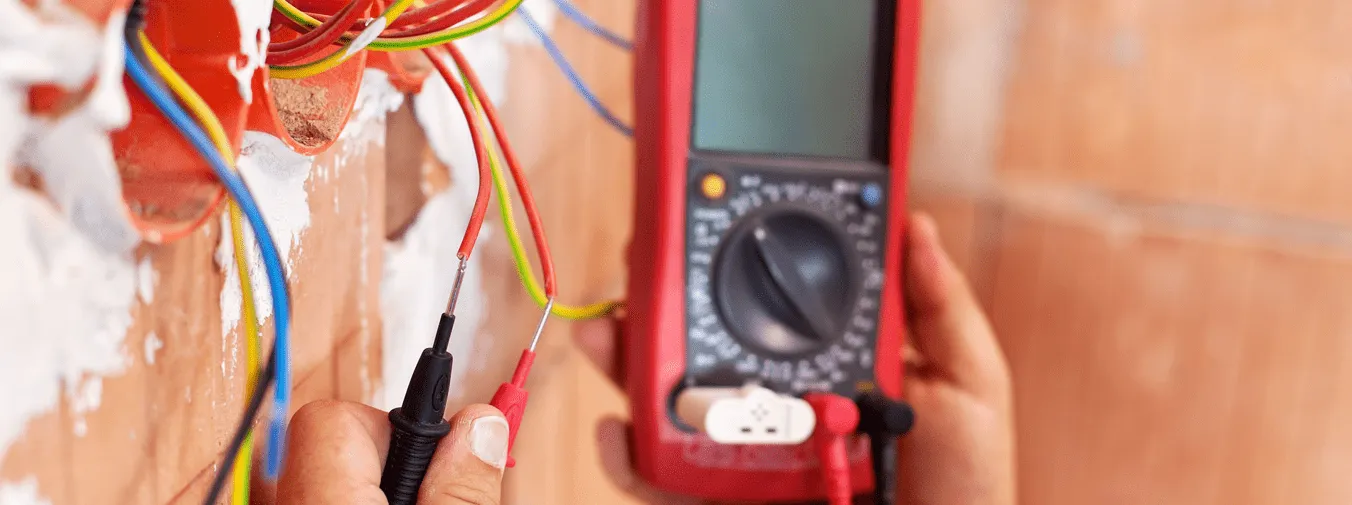
Licensed electricians utilize thermal imaging and circuit analyzers to locate the exact source of impedance or load imbalance without destructive wall cutting. Connections are torqued to manufacturer specification (NEC 110.14), faulty breakers are replaced with tested OEM units, and full circuit integrity is verified under live test loads.
Common Signs You Need Electrical Repair & Troubleshooting
Safety & Code Verification Notice
All work on this service must be performed by an active state-licensed electrician with valid municipal building permits. Review our sitewide safety standards for state licensing board verification and NEC principles.
Related Electrical Guides & Maintenance
Frequently Asked Questions: Electrical Repair & Troubleshooting
Why does my circuit breaker keep tripping?
A breaker trips due to circuit overload (too many amps drawn), a short circuit (hot wire touching neutral), or a ground fault (hot wire touching ground). Repeated resetting without diagnosis can cause wiring insulation to melt inside your walls.
Is it dangerous if an outlet makes a buzzing sound?
Yes. Buzzing indicates electrical arcing across a loose connection or damaged contacts. Arcing temperatures reach 1,000°F to 10,000°F and present an immediate fire hazard requiring prompt professional repair.
What is a Fair Quote for electrical repair?
Standard diagnostic and small repairs typically range from $150 to $500 depending on complexity, accessibility, and whether replacement breakers or dedicated wiring are required.
Available in All 50 States & Major Metropolitan Areas
Looking for local electricians in your area? Browse our 50-state electrical directory.
Browse States Directory