
Level 2 EV Charger Installation & 240V Dedicated Circuits
What is EV Charger Installation (Level 2)?
Fast-charge your electric vehicle at home with certified Level 2 EV charger installation from licensed electricians. We handle electrical load calculations, 240V dedicated circuit drops, Tesla Wall Connector hardwiring, and municipal permitting with upfront Fair Quotes.
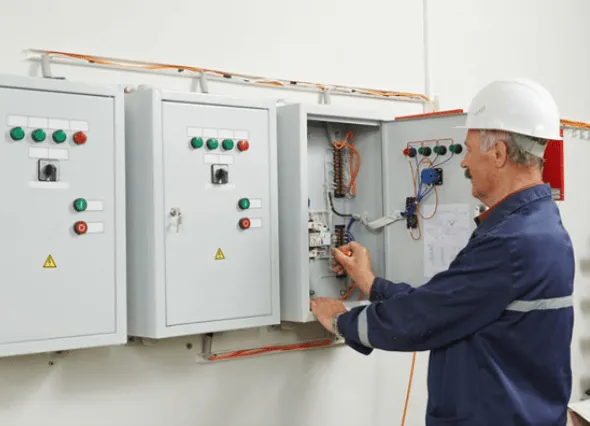
The Science: Continuous Load Rules & 80% Ampacity Derating
EV charging represents a continuous load—defined by the NEC as drawing maximum current for 3 or more continuous hours. Under NEC 625.42 and 210.19, conductors and overcurrent devices must be rated at 125% of the continuous draw (the 80% rule). A 48-amp Level 2 charger requires a dedicated 60-amp circuit with heavy #6 AWG copper conductors rated at 75°C to handle intense continuous thermal stress.
The Pain Point: Melted Receptacles, Tripped Main Breakers, & Slow Charging
Standard 120V Level 1 charging only adds 3–5 miles of range per hour. Using cheap standard receptacles for high-amp EV charging can melt the plastic faceplate and cause terminal fires. Installing a 50A charger on an uncalculated 100A panel can trip your whole house during peak hours.
- Level 1 charger taking 24+ hours to charge your vehicle battery
- NEMA 14-50 plug feeling burning hot to the touch after 2 hours of charging
- Main breaker tripping when EV charges while air conditioning is running
- Unpermitted charger installations failing municipal safety code checks
The Better Way: Hardwired High-Amp EVSE with Dedicated Surge Protection
Master electricians perform NEC load calculations to verify service capacity, install heavy-duty industrial-grade breakers, run appropriately gauged copper conductors in protective conduit, and hardwire the EVSE directly to eliminate receptacle failure points for maximum 48A/11.5kW charging speeds.
Common Signs You Need EV Charger Installation (Level 2)
Safety & Code Verification Notice
All work on this service must be performed by an active state-licensed electrician with valid municipal building permits. Review our sitewide safety standards for state licensing board verification and NEC principles.
Related Electrical Guides & Maintenance
Frequently Asked Questions: EV Charger Installation (Level 2)
Is it better to hardwire an EV charger or use a NEMA 14-50 plug?
Hardwiring is safer, allows higher charging speeds (48A vs 40A on a plug), and eliminates the risk of plug terminal degradation from continuous high-amperage heat cycles.
Do I need a 200 amp panel to install an EV charger?
Not always, but an NEC load calculation is required. If your 100A panel has available capacity, a 30A or 40A circuit can often be added, or a smart energy management load-shedding device can be installed.
Available in All 50 States & Major Metropolitan Areas
Looking for local electricians in your area? Browse our 50-state electrical directory.
Browse States Directory